beginning with the study of local groundwater conditions
SÚRAO has commenced exploratory borehole drilling work – beginning with the study of local groundwater conditions
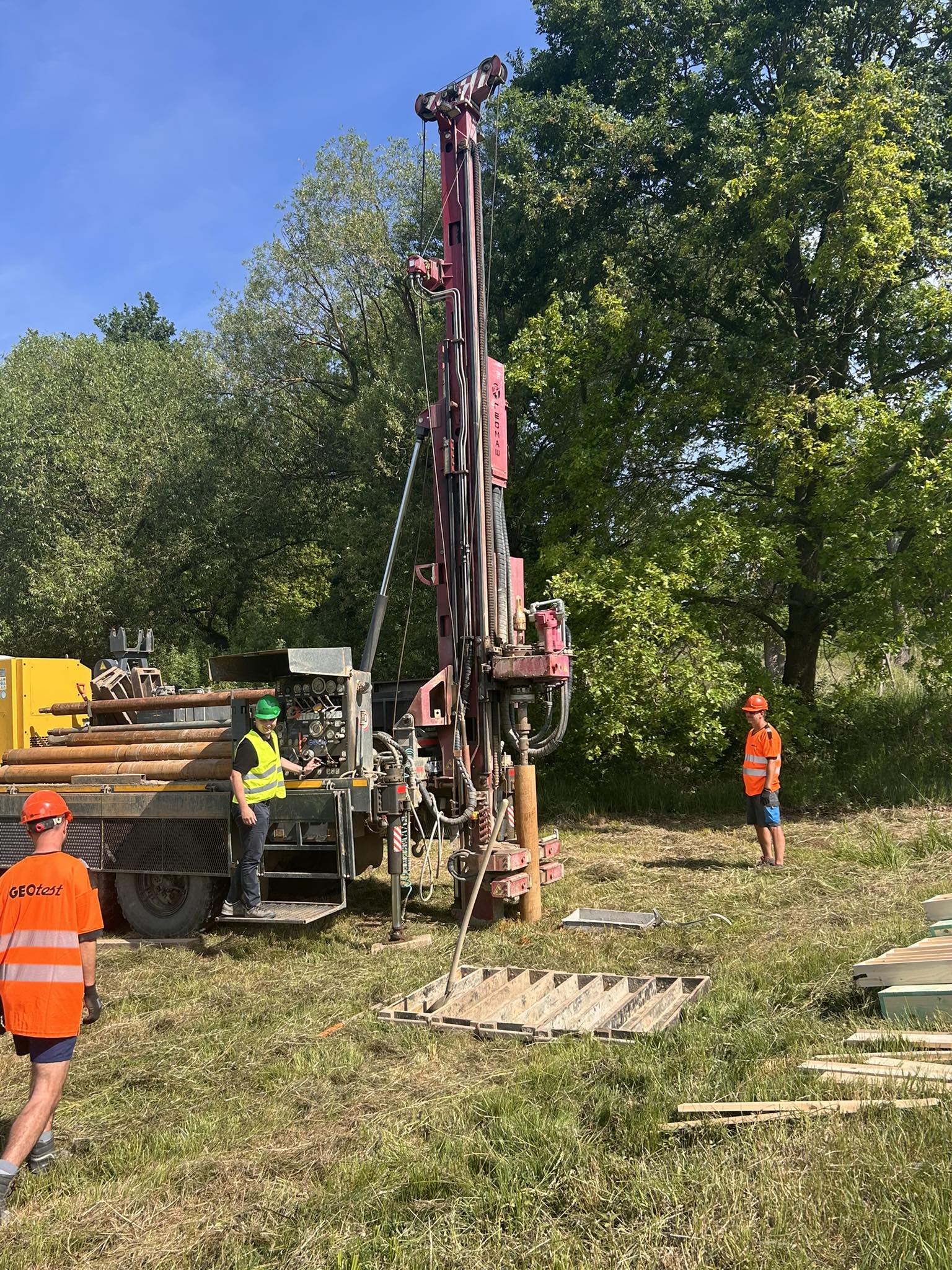
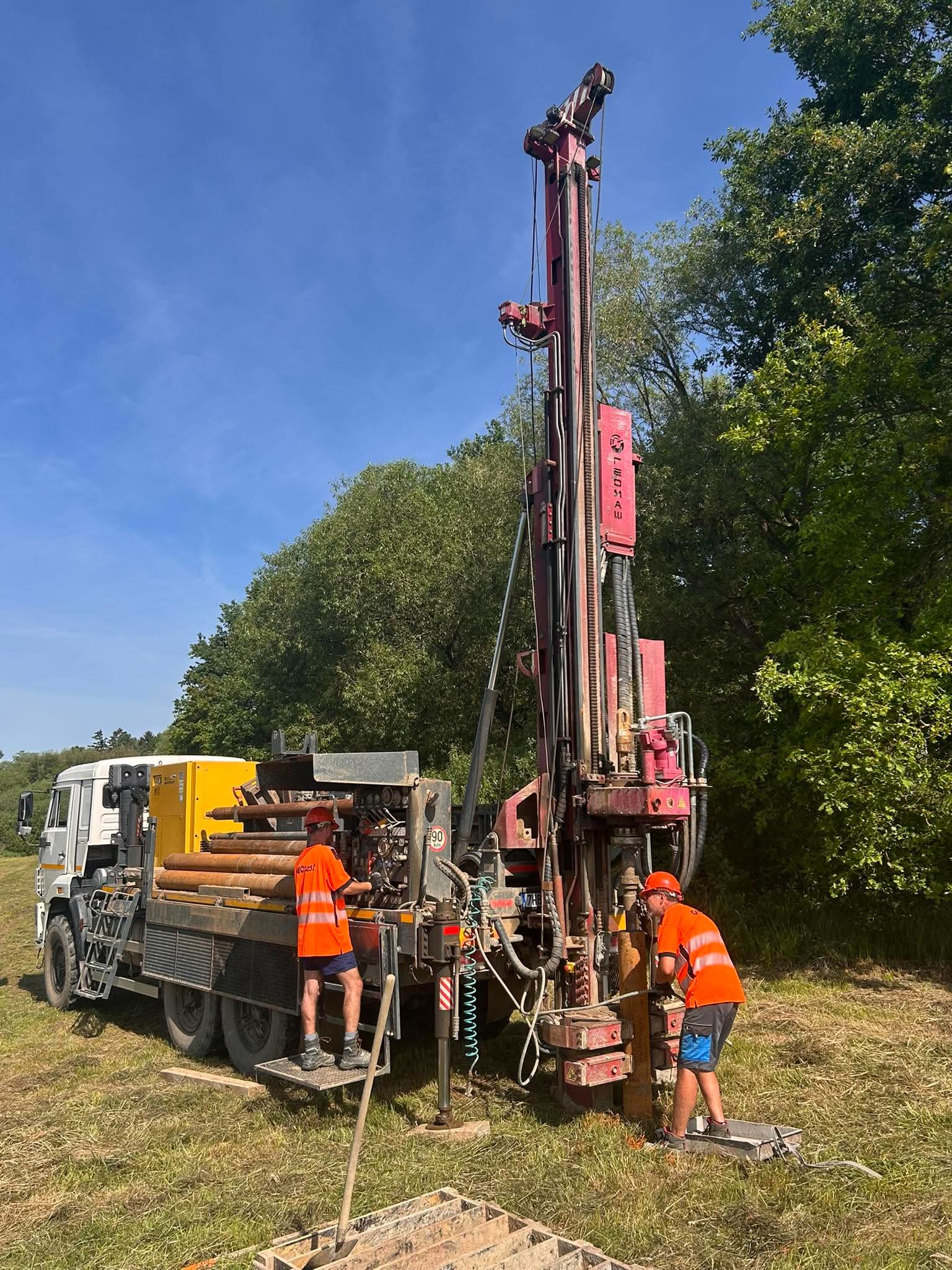
The Czech Radioactive Waste Repository Authority (SÚRAO) has initiated the drilling of monitoring boreholes at the sites being considered for the potential construction of the Czech deep geological repository (DGR). The first drilling campaigns are aimed at the study of hydrogeological conditions and will focus on gathering information on the geological structures of the sites in relation to the local groundwater conditions and selected related parameters. The boreholes will serve as an important source of data for experts in a number of scientific fields.
The boreholes make up a crucial component of the exploration research that is underway at the sites that will contribute to the selection of the most suitable and safest site for the DGR. “This is an important milestone in the process surrounding the selection of the final and backup DGR sites. For the first time in the history of our organisation, we have the chance to gather data directly from the underlying rock strata via the sinking of boreholes, thus allowing us to refine the knowledge we have already obtained via surface exploration methods. We will be able to define the local hydrogeological conditions in greater detail than previously via the availability of high-quality data aimed at selecting the final and backup DGR sites,” stated SÚRAO Managing Director Lukáš Vondrovic, adding that several boreholes will be drilled at each DGR candidate site, the number of which will depend on the natural conditions of each area.
Boreholes will be drilled at all four DGR candidate sites. Pairs of boreholes will be sunk several metres apart at locations identified by the Czech Geological Survey based on expert knowledge. One of the boreholes from each pair will be up to 100 m deep and will serve for the study of the rock mass and groundwater water conditions at depth, whereas the shallower adjacent borehole will provide for the monitoring of the quality and quantity of the groundwater directly below the Earth’s surface, i.e. at depths that are influenced by both precipitation and human activity.
The boreholes will provide essential information on the groundwater conditions at the sites.
The borehole drilling campaign makes up just one component of a hydrogeological, hydrological and hydrochemical monitoring project that was launched two years ago at all four candidate DGR sites. The GEOtest/GeoTec consortium was selected as the contractor for the project.
Forming a detailed knowledge of the state of the surface water and groundwater at the candidate DGR sites is a prerequisite for both the final decision on the siting of the DGR and the protection of local water resources. The monitoring project will result in comprehensive assessments of the water distribution system, water resources and metrological phenomena at the sites. Previous work included the installation of spillways along watercourses, the mapping of springs and the establishment of weather stations for the constant monitoring of the local meteorological conditions. The data gathered via these methods will now be supplemented by the data obtained from the boreholes.
The first set of boreholes will be drilled at the Janoch site. The drilling of the 100-metre borehole, which will take around 14 days, will be followed by the taking of measurements and the conducting of hydrodynamic tests from various depths in the borehole. Testing will include the pumping of water from the borehole for a short period of time followed by the determination of how quickly the water rises to its original level (so-called borehole recovery testing). Water samples will be taken from the boreholes on a quarterly basis for detailed examination in accredited laboratories. The boreholes will remain in use for the next few years, whereupon monitoring will continue at just the final and backup sites (once decided).
Hydrogeological drilling work forms just one part of the research that will be conducted at the four sites; it will be followed by the taking of extensive geophysical measurements via further deep borehole drilling. The detailed information obtained will provide the data necessary for the eventual decision on the selection of the final and backup DGR sites as early as in 2030.
The boreholes are located in so-called exploration areas for special intervention into the Earth’s crust, the municipalities in which are entitled to legally set annual financial contributions paid out by SÚRAO. Such contributions amount to in excess of CZK 100 million per year. More information on financial contributions is available at: https://surao.gov.cz/prispevky-obcim/